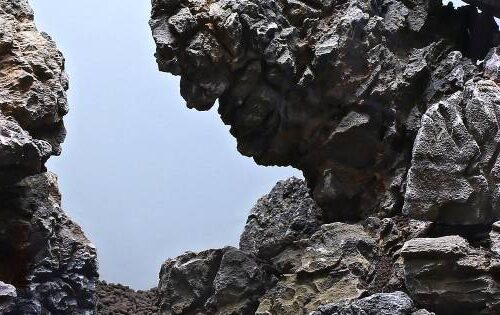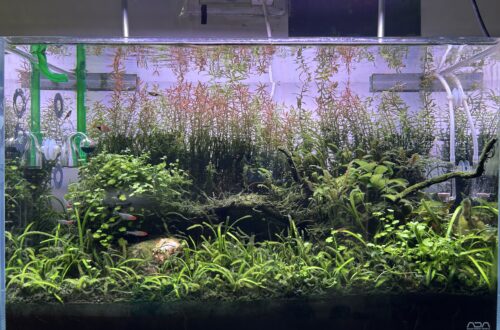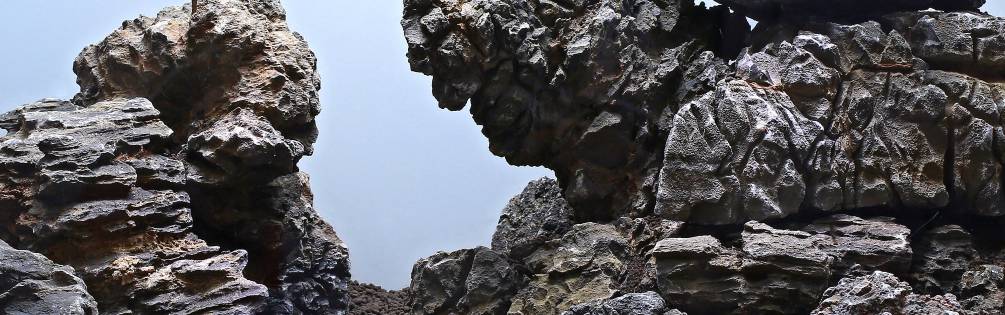
Why Stones Are the Soul of Your Aquascape
When I first got into aquascaping, I thought the magic came from the plants. Or maybe the fish. Or maybe those impossibly clear waters I kept seeing on Instagram. But after a few tanks (and more than a few rescapes), I realized something surprising…
It’s the stones that hold everything together—literally and artistically.
Let me tell you why rocks aren’t just the backdrop. They’re the soul of your aquascape.
1. They Set the Stage
Imagine trying to build a house without a foundation. That’s what aquascaping is like without a proper hardscape.
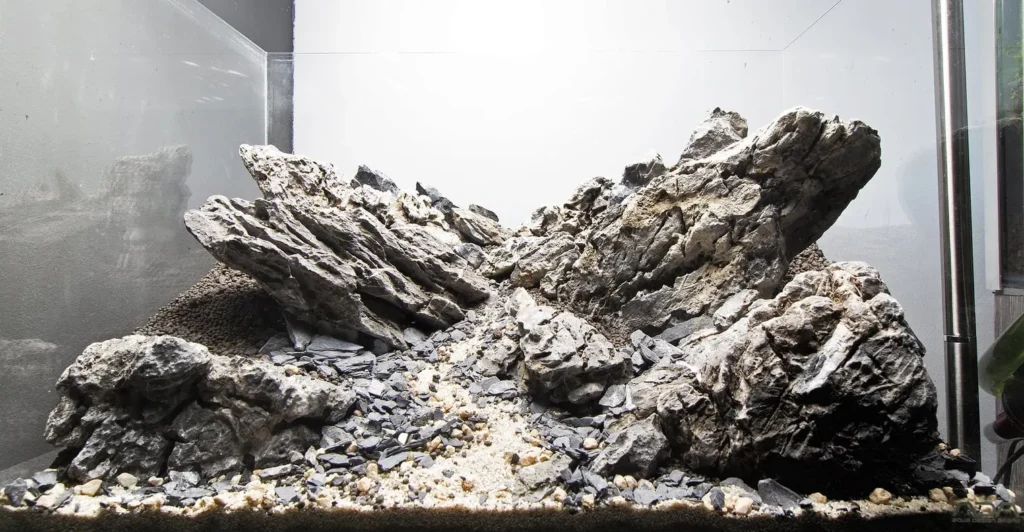
Stones are your bones, your frame, your terrain. They give your layout shape, height, flow, and depth. Before a single plant goes in, the rocks decide how your scape will move and breathe.
When I drop a Seiryu or Dragon Stone into an empty tank, I’m not just placing a rock—I’m carving out a world.
2. They Tell a Story
Each type of stone brings its own vibe:
- Seiryu feels like ancient cliffs in a Japanese forest.
- Dragon Stone? Think prehistoric jungle or the ruins of a lost temple.
- Manten whispers quiet, weathered beauty—like something you’d find on a misty hike.
Your choice of rock sets the mood and narrative of your aquascape. It’s the difference between a peaceful Zen garden and a wild, untamed jungle.
3. They Guide the Eye
Good aquascaping isn’t just pretty—it’s composed.
Rocks help guide the viewer’s gaze through your layout. A tall centerpiece stone might draw attention first, while smaller supporting stones help build a natural rhythm. It’s like visual storytelling in 3D.
The right stone in the right place can make your 20-gallon tank feel like an endless valley or a mountain pass lost in time.
4. They’re More Than Just Looks
Sure, rocks are beautiful. But many also pull double duty:
- Porous rocks like lava stone encourage the growth of beneficial bacteria.
- Textured stones give moss and epiphyte plants something to cling to.
- Crevices and shadows create safe spaces for fish to hide or claim as their territory.
Your stones aren’t just shaping the scape—they’re helping maintain balance and biodiversity inside the tank.
5. They Make It Feel Alive
Fish interact with hardscape more than we realize. Shrimp crawl over stone surfaces looking for biofilm. Cichlids carve out territories between rocks. Small tetras dart in and out of crevices, feeling safer—and behaving more naturally—because those stones give them a sense of home.
Without the rocks, your tank is just a box of water. With them? It becomes a world.
So, Coming to the point, what are the different types of stones that are used in aquascaping and how you identify them. No just go to the local aquarium shop and the shop owner give you anything without knowing what it is……
1. Seiryu Stone: The King of Aquascaping Rocks
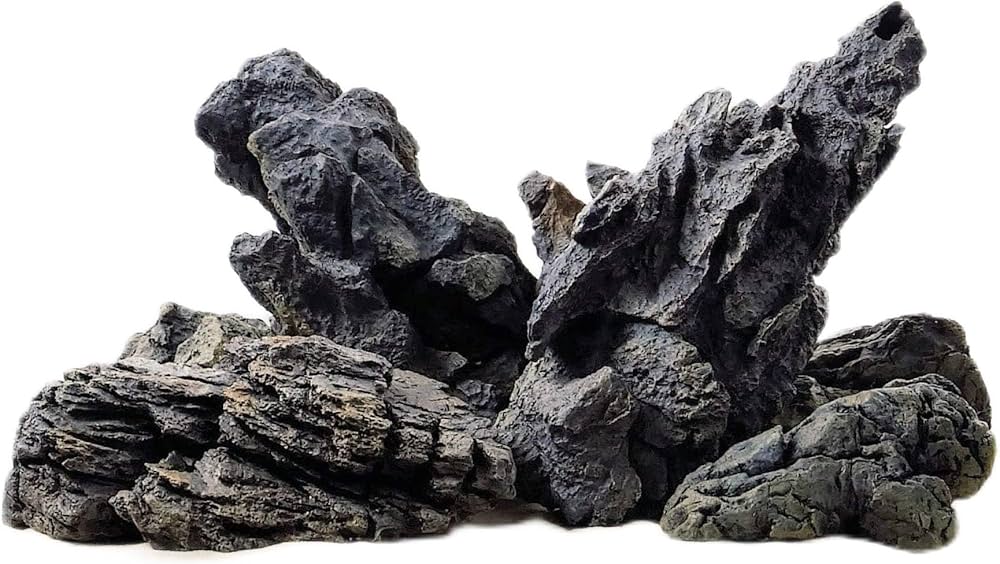
When I first walked into a proper aquascaping store, I wasn’t looking for anything specific. I was just window-shopping, soaking it all in. But then I saw it—jagged, blue-gray, and streaked with white veins. A pile of Seiryu stones stacked like miniature mountain ranges.
And just like that, I was hooked.
What Is Seiryu Stone?
Seiryu Stone (also called Seiryu-ishi) is a limestone-based rock native to Japan, prized for its dramatic, rugged appearance. Its sharp edges, layered textures, and striking white calcite veins make it one of the most iconic—and most beloved—stones in the aquascaping world.
It’s particularly famous in Iwagumi layouts, where the rocks themselves are the main visual focus, arranged with meditative precision.
Why Aquascapers Love It
Here’s what makes Seiryu stone so special:
- Natural Drama: Its jagged, weathered surface instantly adds a sense of age and grandeur to a tank. You don’t need much to make an impact—just a few carefully chosen pieces.
- Bold Contrast: The cool blue-gray color pops beautifully against green aquatic plants, making your layout look cleaner and more structured.
- Texture for Days: Its rough, detailed surface creates shadows and highlights that bring incredible visual depth to even small tanks.
- Perfect for Minimalism: In Iwagumi-style aquascapes (a minimalist layout using just rocks, carpet plants, and a school of small fish), Seiryu stone is the star of the show.
Things to Know Before Using It
Seiryu stone is stunning—but it comes with a few quirks:
1. It Raises pH and KH
Because it’s limestone-based, Seiryu can slowly leach calcium carbonate into the water, raising pH and hardness. For most community fish, this isn’t a big issue—but for soft-water species or shrimp, it’s something to monitor.
Tip: If needed, you can buffer the effects with driftwood, soil-based substrates, or regular water changes using RO water.
2. It’s Heavy and Sharp
Seiryu is dense, so plan your layout before placing it in the tank. Also, be mindful of sharp edges around delicate fish or when planting near it.
Best Plants to Pair with Seiryu
- Carpet Plants: Monte Carlo, Dwarf Hairgrass, and Glossostigma look incredible growing between Seiryu stones.
- Mosses: If you want a more aged or wild look, use Christmas Moss or Riccardia to soften the stone’s edges.
- Minimalist Touches: Keep it simple—fewer plants often highlight the stones better than a jungle of green.
Ideal Fish Companions
- Tetras (e.g., Ember, Neon, Rummy Nose)
- Rasboras (e.g., Harlequin, Chili)
- Otocinclus
- Shrimp (if water parameters are managed)
These small, peaceful fish enhance the natural scene without overpowering the layout.
Final Thoughts
Working with Seiryu stone is like sculpting a mountain range in miniature. It challenges you to think in layers, angles, and negative space. But once it’s in place, the result is timeless and serene—like a quiet breath held underwater.
Whether you’re building your first Iwagumi layout or just looking to add a touch of drama to your tank, Seiryu stone is a classic for a reason. It doesn’t just decorate your aquascape—it defines it.
2. Dragon Stone in Aquascaping: The Texture That Tells a Story
There’s something ancient about Dragon Stone. The first time I held a piece in my hand, I felt like I had plucked it straight from the ruins of a forgotten temple.
Lightweight, craggy, and full of personality, Dragon Stone (Ohko Stone) might just be the most welcoming and versatile rock in the aquascaping world.
What Is Dragon Stone?
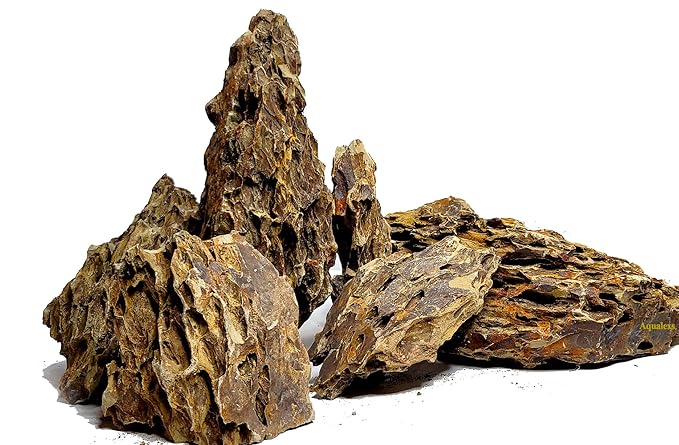
Dragon Stone, or Ohko Stone, gets its name from its scaly, weathered appearance—like the hide of a mythical dragon. It’s a clay-based rock with a warm, earthy color palette ranging from light tan to reddish brown. Its deeply pitted, honeycomb-like surface gives it incredible texture and natural realism.
Unlike some heavier or sharper stones, Dragon Stone is relatively light, easy to shape, and safe for fish and shrimp.
Why Aquascapers Love It
1. Instant Natural Vibe
Its warm tones and irregular surface mimic natural erosion, giving your tank an aged, organic look right from the start. No waiting for moss to grow or algae to “season” the scape—it already looks like it belongs.
2. Easy to Work With
Dragon Stone is relatively soft, so you can break or carve it into smaller pieces using basic tools. This makes it ideal for detailed layouts or nano tanks where space is tight.
3. Perfect for Moss and Plants
Its rough surface is ideal for attaching mosses and epiphyte plants like Anubias or Bucephalandra. The many nooks and crannies give roots and rhizomes places to anchor naturally.
4. No Impact on Water Chemistry
Unlike Seiryu or Ryuoh, Dragon Stone is inert—meaning it won’t alter your water’s pH or hardness. This makes it a safe bet for soft-water species and shrimp tanks.
Best Uses in Aquascaping
- Nature-style layouts: Dragon Stone blends beautifully with driftwood and lush plant growth for that “overgrown forest” look.
- Jungle scapes: Paired with stem plants and mosses, it creates a wild, ancient atmosphere.
- Wabi-sabi tanks: Perfect for creating an aged, imperfect beauty that feels like a slice of untouched nature.
“Dragon Stone is like a good story—it doesn’t scream for attention, but it draws you in with every detail.”
Best Plant Pairings
- Java Moss or Christmas Moss
- Anubias nana petite
- Bucephalandra
- Monte Carlo or Dwarf Hairgrass for carpeting
Ideal Livestock
- Shrimp (especially Caridina and Neocaridina)
- Tetras
- Rasboras
- Dwarf Gouramis or Apistos for nature tanks
Because Dragon Stone doesn’t have sharp edges, it’s a fish- and shrimp-friendly choice.
A Few Tips Before You Start
- Rinse thoroughly: The stone may come with dust or clay debris. A quick scrub and rinse will help keep your tank water clear.
- Layer your layout: Use small pieces in the foreground and larger ones behind to create depth and perspective.
- Add shadows: Its texture creates beautiful shadows when lit from an angle—take advantage of that for dramatic effect.
Final Thoughts
Dragon Stone is like an old friend—reliable, warm, and full of stories to tell. Whether you’re just getting into aquascaping or designing your tenth tank, it offers texture, depth, and character that few stones can match.
It’s not flashy like Seiryu. It doesn’t demand attention. But somehow, it always ends up being the rock you want to build your world around.
3. Grey Rocks in Aquascaping: Minimalism Meets Timeless Beauty
If aquascaping is an art form, then grey rocks are the charcoal sketch—understated, elegant, and effortlessly grounding. While more colorful stones might steal the spotlight, grey rocks are the quiet heroes that bring balance, calm, and visual harmony to any layout.
They don’t scream for attention, but that’s exactly why they’re so powerful.
Why Grey Rocks?
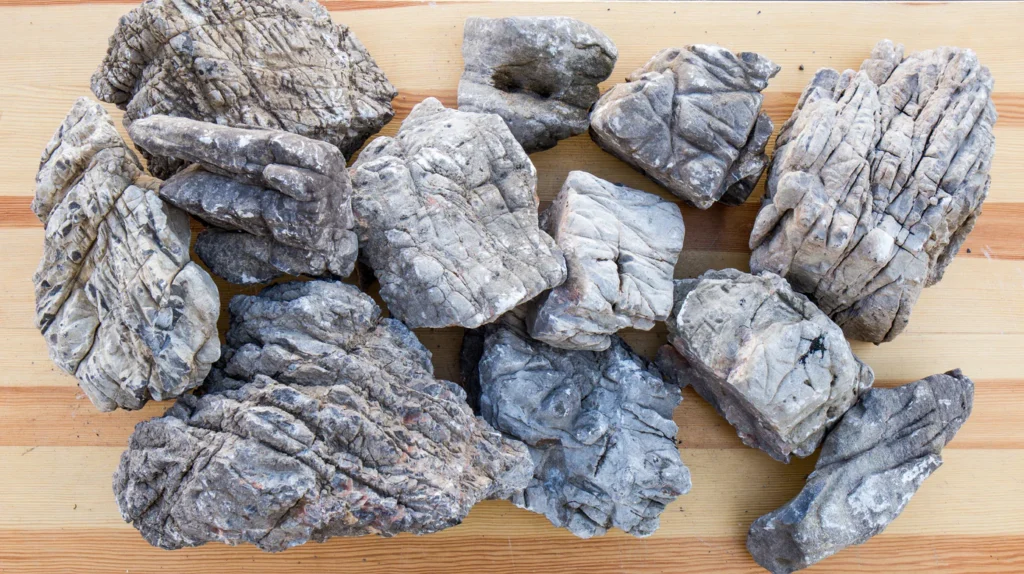
Grey stones come in many varieties—Seiryu, Ryuoh, Manten, Elephant Skin Stone, and even some slate or granite types—but they all share a cool, natural look that pairs effortlessly with aquatic plants and fish.
Here’s why grey rocks have become a go-to choice for both minimalist and nature-style aquascapes:
1. They Let the Plants Shine
In tanks overflowing with rich green plants or colorful reds, grey rocks provide contrast without distraction. The neutral tone makes everything else—your fish, mosses, stems, and carpets—pop naturally.
It’s like having the perfect background that enhances the main performance.
2. They Feel Natural and Timeless
Grey is the color of mountain stone, riverbeds, and mist-covered cliffs. It feels real and rooted, giving your layout a grounded, earthy mood.
Whether you’re building a rugged Iwagumi scape or a soft jungle-style tank, grey stones add a sense of quiet age—like a landscape that’s existed for centuries.
3. They Help Create Visual Balance
Aquascaping is all about flow and balance, and grey rocks are incredibly versatile. They can be:
- Focal points in minimalist layouts
- Supporting stones in plant-heavy scapes
- Structural tools for building elevation or framing paths
They’re like the neutral thread that holds everything else together.
Common Types of Grey Aquascaping Rocks
| Rock Name | Color Tone | Traits | Notes |
|---|---|---|---|
| Seiryu Stone | Blue-grey | Veined, sharp, bold | Slightly raises pH/KH |
| Ryuoh Stone | Cool grey | Rounded, natural erosion look | More subtle than Seiryu |
| Manten Stone | Soft grey-brown | Smooth texture, minimalist look | Often used in nature-style tanks |
| Elephant Skin Stone | Grey with texture | Deep cracks and grooves | Great for moss and shrimp |
| Slate | Dark grey | Flat, stackable | Ideal for shelves and caves |
Best Aquascaping Styles for Grey Rocks
- Iwagumi layouts: Grey stones are perfect for high-contrast minimalist scapes with carpet plants and small fish.
- Nature-style tanks: Their neutral tone blends well with wood, plants, and diverse textures.
- Mountain or river themes: Grey rock mimics natural geological formations beautifully.
Compatible Fish and Plant Pairings
Fish:
- Neon Tetras
- Otocinclus
- Galaxy Rasboras
- Shrimp (Amano, Cherry, etc.)
Plants:
- Monte Carlo or Glossostigma carpets
- Hairgrass for grassy valleys
- Bucephalandra and Anubias for shaded areas
- Mosses (Christmas, Flame) for texture
Final Thoughts
Grey rocks are more than just filler—they’re the foundation of beauty and balance in your aquascape. Subtle, powerful, and effortlessly elegant, they create a backdrop that feels both modern and ancient.
If you want a layout that feels calm, timeless, and artfully restrained, grey rocks are your best friend.
Sometimes, less really is more.
4. Pagoda Stones in Aquascaping: Layered Beauty with Ancient Character
There’s something undeniably ancient and architectural about Pagoda Stone. With its soft, layered texture and warm earth tones, it feels like a miniature monument—something you might discover tucked into the side of a mossy mountain, or at the base of a forgotten temple.
When used in aquascaping, Pagoda Stone doesn’t just shape the terrain—it builds stories.
What Is Pagoda Stone?
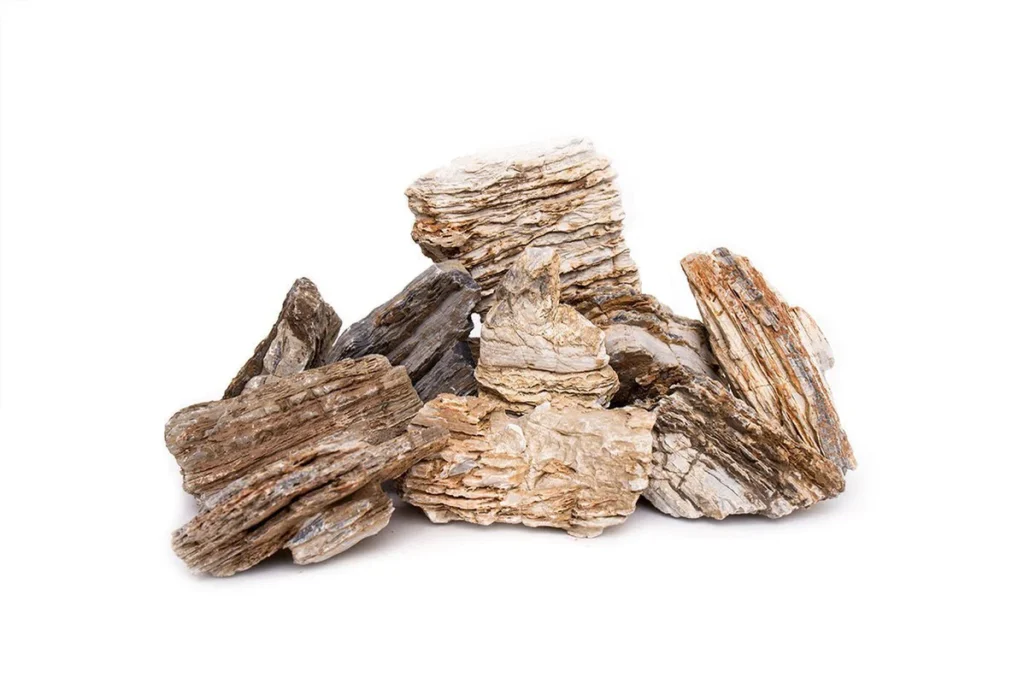
Pagoda Stone, also called Mini Landscape Rock, is a sedimentary stone known for its fine horizontal striations that give it a stacked, layered look—like pages of a book or old pagoda rooftops weathered by time.
Its colors range from beige to brown, with hints of soft greys, making it one of the most visually textured stones in aquascaping.
Why Aquascapers Love Pagoda Stone
1. Architectural Elegance
Its layered, stair-step surface gives tanks a natural terraced feel. Even in smaller tanks, it creates the illusion of scale—like sedimentary cliffs or rocky ledges.
Perfect for scapers who want to build depth and dimension without bulky stones.
2. Unique Texture
Most aquascaping rocks are sharp or rugged, but Pagoda Stone is subtle and refined. The fine lines catch light differently from every angle, giving your layout natural shadow and rhythm, even with minimal plant growth.
3. Easy to Pair with Moss and Carpets
Mosses like Riccardia or Christmas Moss love the rough striations, while carpeting plants such as Monte Carlo and Eleocharis can grow beautifully in the crevices between layered pieces.
Want that “ancient ruin slowly being overtaken by nature” look? Pagoda Stone nails it.
4. Aquarium Safe and Inert
Pagoda Stone is inert, meaning it won’t affect your tank’s water parameters. It’s safe for:
- Shrimp
- Soft water species
- Heavily planted tanks with delicate livestock
Aquascaping Ideas with Pagoda Stone
- Terraced Hillsides: Stack small pieces to create stepped cliffs or eroded ridgelines.
- Overgrown Temples: Combine Pagoda with driftwood and moss for a mystical, jungle feel.
- Riverbed Scenes: Place pieces flat to mimic ancient rock beds in shallow tanks.
Great Plant and Fish Pairings
Plants:
- Riccardia moss (for texture)
- Monte Carlo (for low carpets between stones)
- Anubias petite (nestled in ledges)
- Bucephalandra (for shaded rock pockets)
Fish/Shrimp:
- Cherry or Amano shrimp
- Ember tetras or Galaxy Rasboras
- Kuhli loaches or Corydoras in wider tanks
Pro Tips for Working with Pagoda Stone
- Use in clusters: Layer several stones together for the most realistic effect.
- Highlight with shadows: Light from the side or above to emphasize the striations.
- Avoid symmetry: Pagoda looks best when arranged in uneven, natural groupings.
Final Thoughts
Pagoda Stone is for the dreamers—the aquascapers who want to build a world that feels lived-in and quietly majestic. It doesn’t scream for attention, but it does draw you in with its subtle beauty and layered charm.
Whether you’re going for mystery, minimalism, or a storybook forest floor, Pagoda Stone can help you get there—one layer at a time.
In the next blog of this series I will discuss on the following rock types of aquascaping
- Manten stones
- Koka stones
- Unzan stones
- Frodo stones
- Sansui stones
- Kai stones
- Yamaya stones
- Lava stones
Till then enjoy and Happy aquascaping…………..