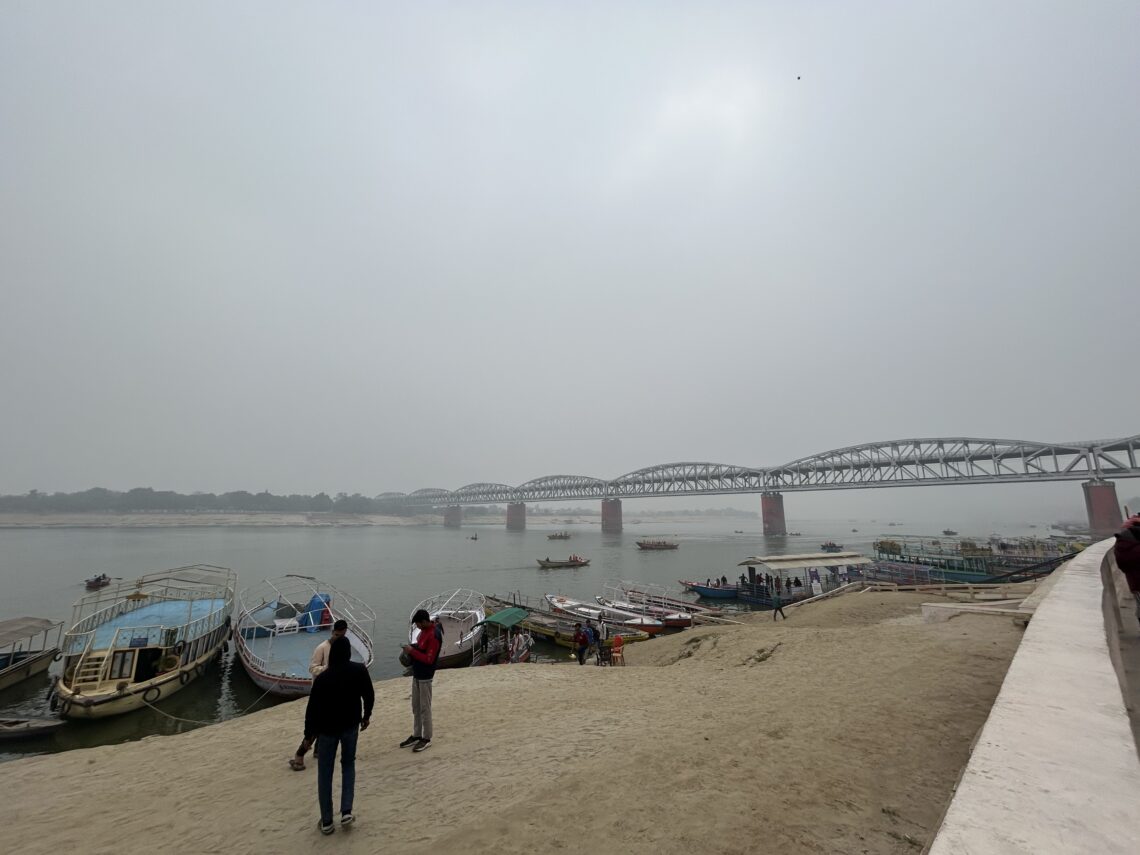
India’s spiritual heritage is best experienced not through books, but through journeys. Among its many sacred destinations, Prayagraj (formerly Allahabad) and Varanasi stand out as two of the most significant religious cities in the country. In December, we embarked on a memorable three-day road trip to these historic cities, covering approximately 750 km from Maihar to Prayagraj, onward to Varanasi, and back again.
This journey was not just about distance—it was about history, faith, culture, and discovery.
The Spiritual Legacy of Prayagraj and Varanasi
Prayagraj was founded in 1575 by the Mughal emperor Akbar and originally named Ilahabas, meaning “Abode of God.” The city lies on a peninsula formed by the confluence of the rivers Ganga and Yamuna, and it is most famous for the Triveni Sangam—the sacred meeting point of the Ganga, Yamuna, and the mythical Saraswati.
About 122 km away lies Varanasi, often considered the world’s oldest continuously inhabited city. Known as the spiritual capital of India, Varanasi’s identity is inseparable from the Ganga and its countless ghats, where life, death, devotion, and tradition coexist.
Day 1: Maihar to Prayagraj — Arrival at the Sangam
We began our journey from Maihar on 28th December at 9 a.m. The road conditions were challenging while crossing the Sohagi mountain range and passing through Rewa district (NH30). However, upon entering Uttar Pradesh, the difference was striking—smooth highways allowed for consistent speeds between 110–120 km/h.
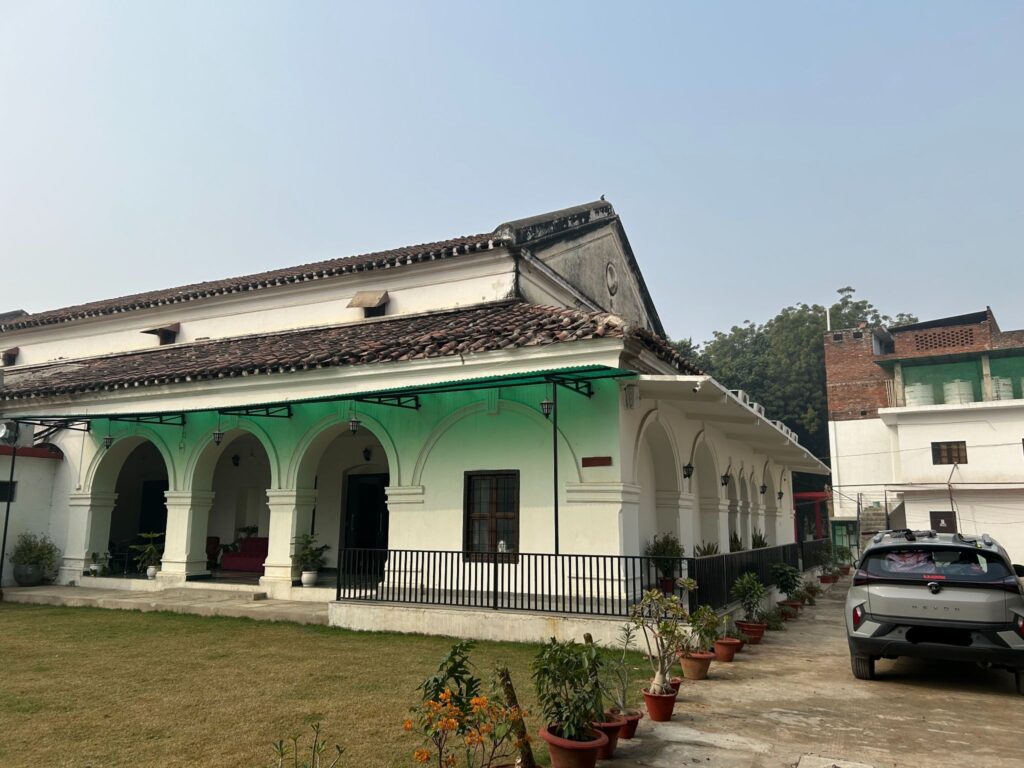
Apart from a brief stop for our dog, we drove continuously and reached British Kothi, our resort in the heart of Prayagraj, by around 1 p.m. A light winter fog enveloped the city, giving it a calm and atmospheric charm.
After check-in, we headed straight to the Triveni Sangam, just 8 km from the hotel. While the area was not heavily crowded, preparations for Magh Mela 2026 were already underway. Witnessing the confluence of the three rivers—each displaying distinct shades—was a truly mesmerizing experience. Unfortunately, we could not take a boat to the exact meeting point as pets are not allowed onboard.
We returned to the hotel with plans for the next day: a visit to Varanasi’s iconic ghats and a culinary stop at the legendary Ram Bhandar.
Day 2: Prayagraj to Varanasi — Ghats and Flavours
We started early, leaving Prayagraj at 8 a.m. The journey to Varanasi (approximately 145 km) took about three hours via an excellent six-lane highway—easily one of the smoothest driving experiences of the trip.
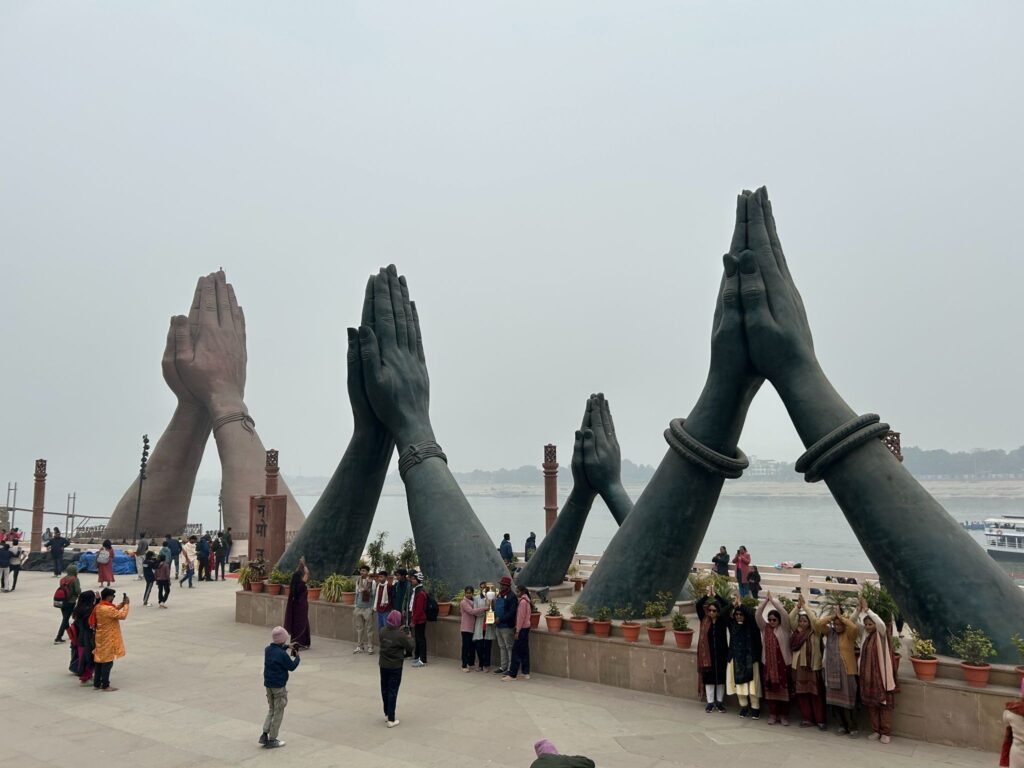
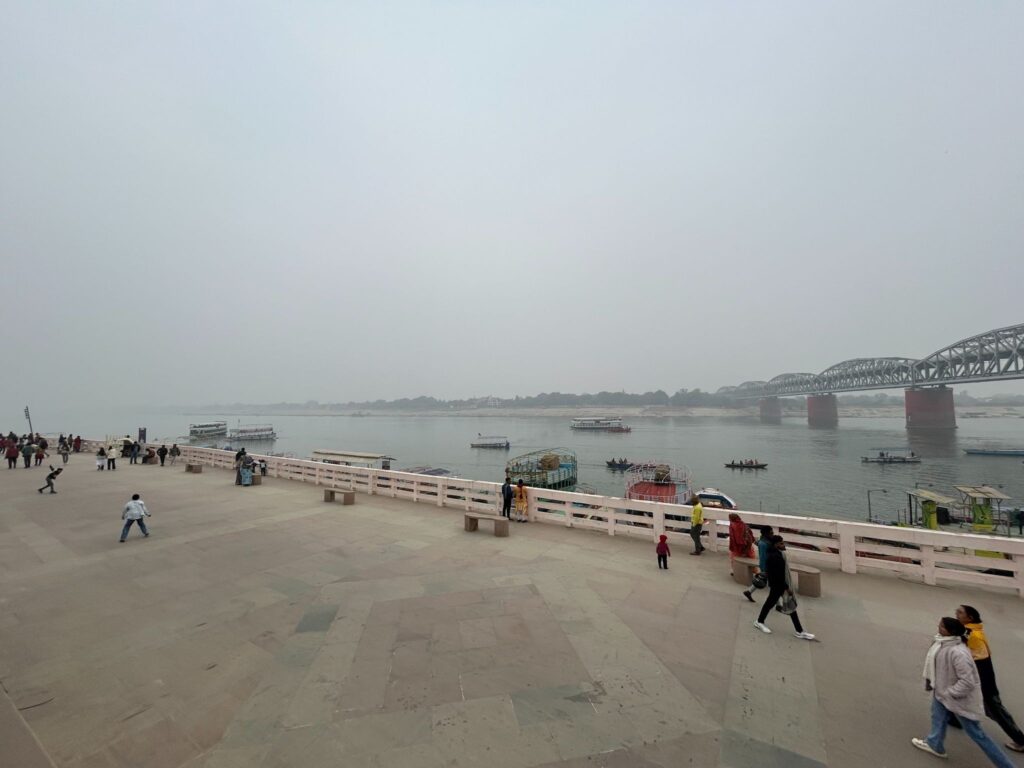
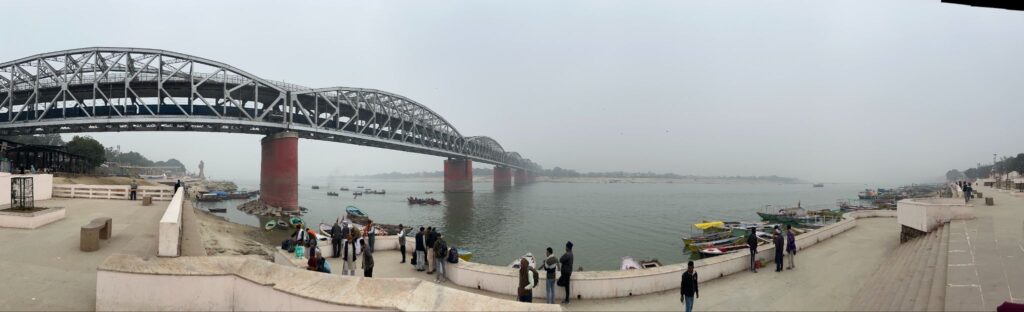
Our first destination was Namo Ghat, a modern addition to Varanasi’s riverfront. Its foundation stone was laid by the Honorable Prime Minister Shri Narendra Modi in 2018. The ghat features clean architecture, contemporary facilities, and a peaceful ambiance. In contrast, Varanasi’s ancient ghats—such as Dashashwamedh Ghat, Manikarnika Ghat, and Assi Ghat—reflect the city’s timeless soul and are best explored on foot through the narrow, historic lanes.
After spending time absorbing the spiritual atmosphere along the Ganga, we visited Ram Bhandar, a celebrated local eatery known for its kachori, sabzi, and jalebi. With multiple outlets across the city, we found one and waited in a long queue—proof of its popularity. We packed our meal and began our return journey to Prayagraj.
By 4 p.m., we were back in Prayagraj. The city was visibly growing more crowded due to the approaching Magh Mela. We rested for the night, preparing for our final day of exploration.
Day 3: Deur Kothar Stupas and Return to Maihar
After breakfast and checkout, we departed Prayagraj at 10 a.m. On our way back, we made a culturally significant stop at the Deur Kothar Buddhist Stupas in Rewa district. Discovered in 1982, this archaeological site dates back nearly 2,000 years and is believed to belong to the era of Emperor Ashoka.
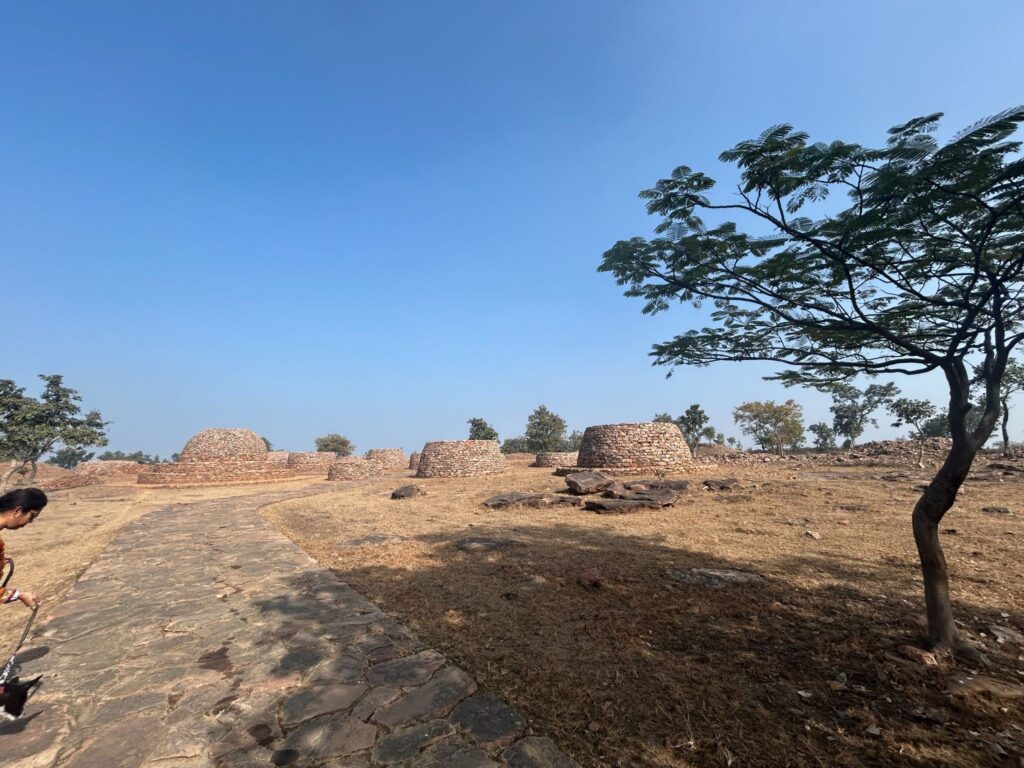
The site includes three large brick stupas and numerous smaller stupas constructed from 46 different types of stones. Located in a quiet, isolated landscape, Deur Kothar offers a powerful sense of historical depth and tranquility.
We resumed our journey and reached Maihar by around 4 p.m., bringing our three-day road trip to a fulfilling close.
Final Thoughts
This journey through Prayagraj and Varanasi was more than a road trip—it was an immersion into India’s living history and spiritual consciousness. From sacred riverbanks to ancient stupas, smooth highways to crowded ghats, every moment offered a blend of reflection, wonder, and connection.
For travelers seeking both cultural depth and meaningful experiences, this circuit is truly unforgettable.
