Hey everyone! 👋
Welcome to my blog—and more specifically, welcome to my aquascaping journey. If you’re wondering what “aquascaping” even means, you’re not alone. A few years ago, I didn’t know either. Fast forward to now, and I’m totally hooked.
So what is it?
Aquascaping is basically underwater landscaping. Instead of just throwing a few fish into a tank with some plastic plants, you’re building an actual ecosystem—a living, breathing piece of art using real aquatic plants, rocks, driftwood, and a little bit of creativity.
How I Got Started
It all began with a random YouTube video—one of those “aquarium” “satisfying aquascaping time-lapse” related types. I had no idea you could turn a glass box into such a stunning little world. Within a week, I had fallen down the rabbit hole: researching plant types, watching tutorials, and drawing layout ideas on napkins like some sort of aquatic architect.
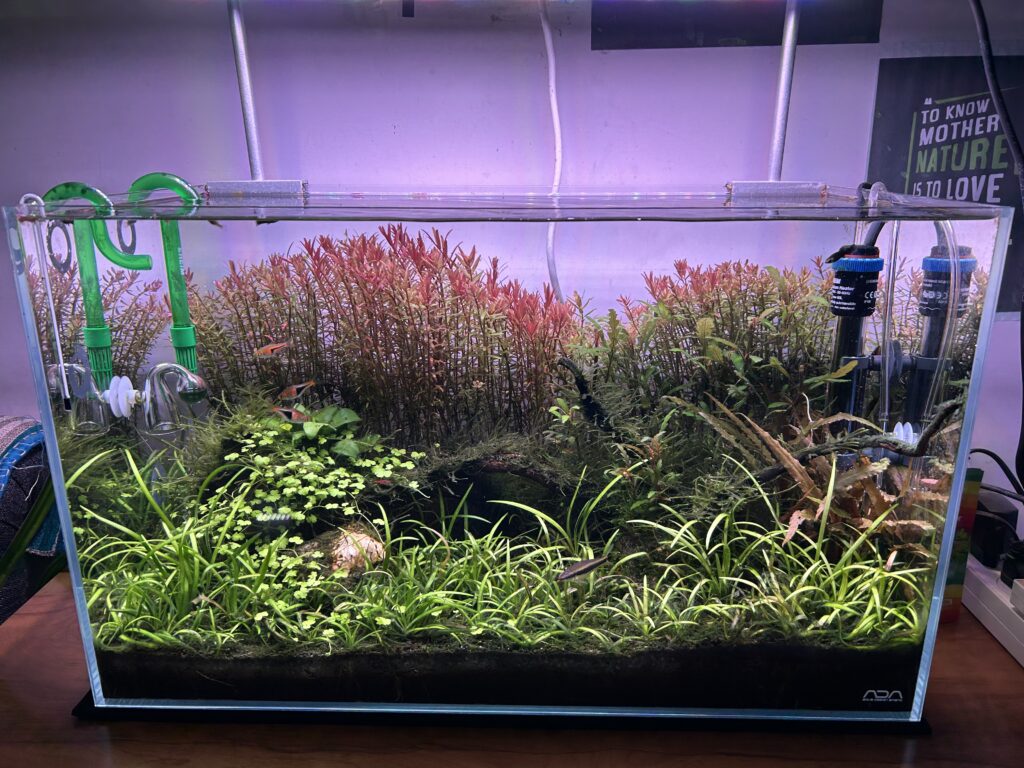
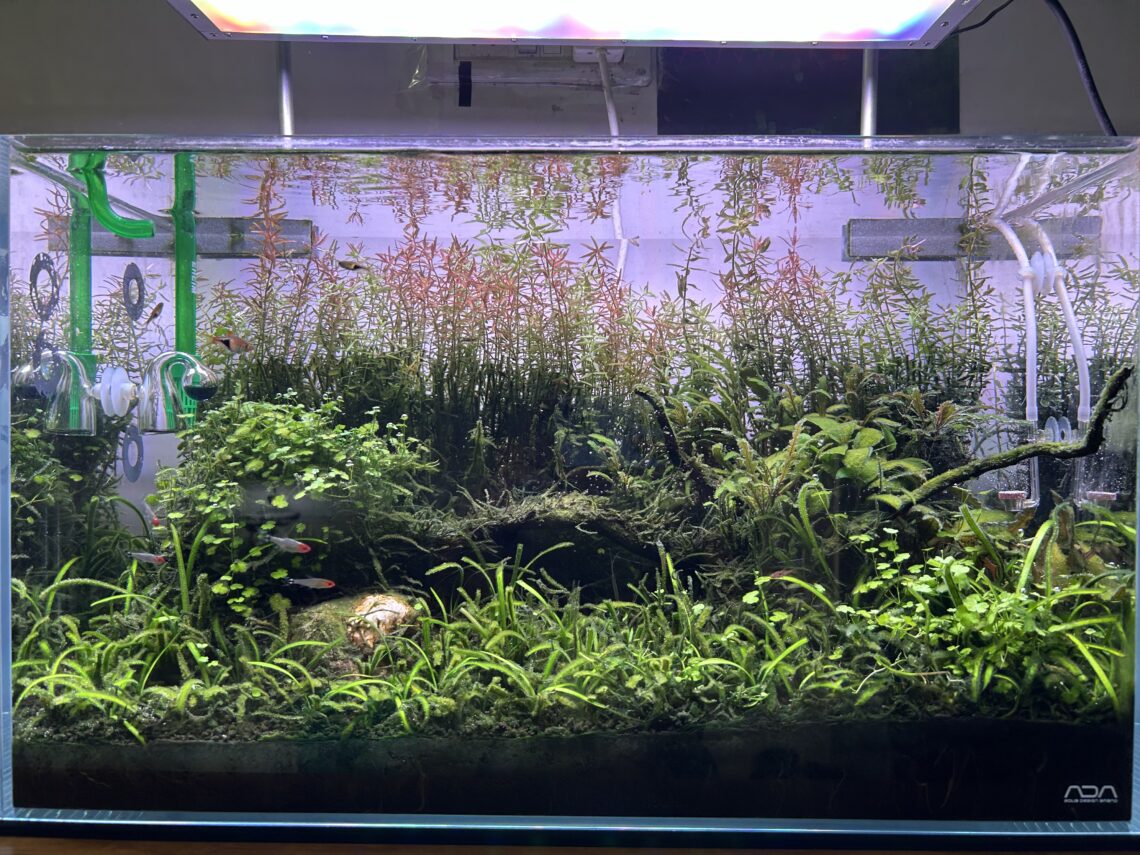
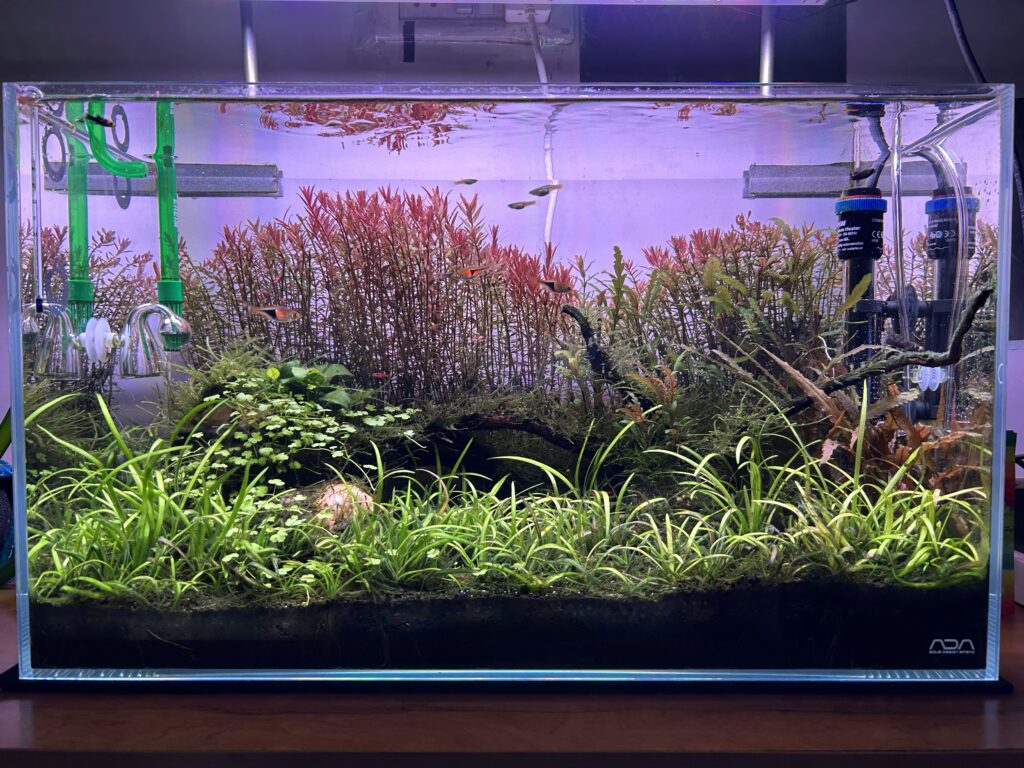
Eventually, I picked up a small 60 litre tank, some beginner-friendly plants, a couple of sheriyu rocks, soil, driftwood, filter, light and CO2 supply and boom—my first scape was born.
Why I Love It
Honestly? It’s peaceful. There’s something incredibly calming about working on an aquascape. It’s slow and steady—no instant gratification, just quiet progress. Watching plants take root and grow, adjusting the layout, and seeing the whole thing come to life over time—it’s weirdly therapeutic.
It also makes you appreciate nature in a whole new way. You start noticing details: how light hits the leaves, how fish interact with their environment, how even a small stone placement changes the flow of the tank.
What I’ve Learned So Far
- Start simple: You don’t need expensive gear or rare plants to make something beautiful.
- Patience is everything: Plants take time to grow in, and rushing usually backfires.
- Balance is key: Light, CO2, nutrients—everything needs to work together.
- Don’t fear failure: My first scape wasn’t perfect (still isn’t!), but that’s part of the process.
What’s Next?
I’m already dreaming up my next layout, experimenting with different plant species, and maybe even trying a new aquascaping style like Iwagumi or a Dutch-inspired tank.
If you’re thinking about trying aquascaping or you’re already in the hobby, I’d love to connect. I’ll be sharing updates, tips I’ve picked up, and probably a few mistakes along the way too.
Thanks for reading—and stay tuned for more underwater adventures!